
2026-08-31 · Michael Johnson
Preventing Secondary Damage After Roof Leaks During Monsoons
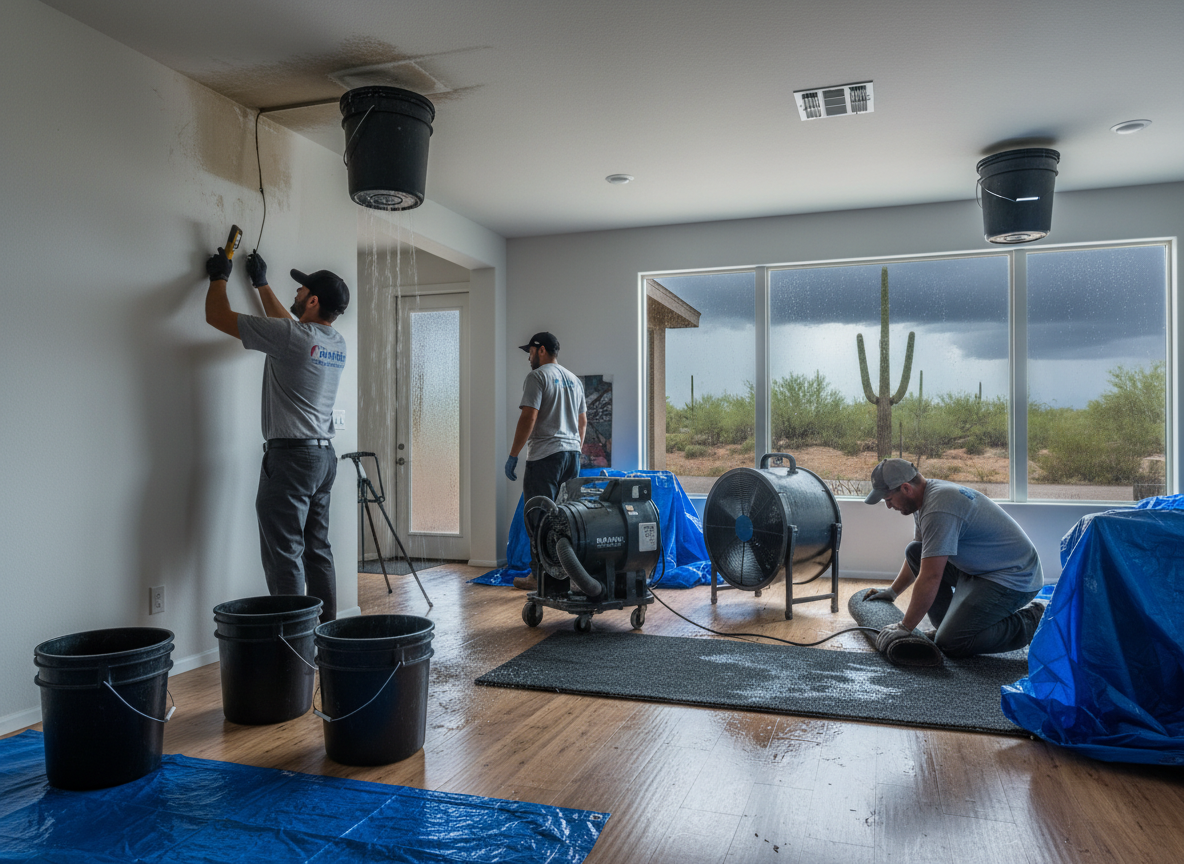
Acting within the first 24 to 48 hours after a roof leak during monsoons prevents secondary damage by halting moisture spread that leads to mold and warped materials in Gilbert homes. In Maricopa County's hot desert climate, monsoon rains hit suddenly and combine with high temperatures to accelerate evaporation that pushes water into attics, walls, and ceilings. Homes in neighborhoods such as Downtown Gilbert and Layne Heights often feature older tile roofs that crack under repeated storms, allowing water to pool unseen until it reaches living spaces. Quick water extraction followed by targeted drying stops the cycle before it reaches nearby cities like Chandler or Mesa. Delaying even a few days lets humidity levels climb inside structures, especially in single-story ranch homes common across San Tan Ranch.
Spotting Hidden Moisture After Monsoon Leaks
Monsoon storms deliver intense but brief downpours that test every roof seam in Gilbert. Water often travels along rafters before dripping into insulation or drywall, creating pockets that feel dry on the surface yet hold enough moisture to support mold within days. In Agritopia and Power Ranch, where many homes sit on larger lots with mature landscaping, runoff from heavy rain can push additional water under eaves and into crawl spaces. Check ceilings in upstairs rooms and around skylights first, then use a moisture meter on baseboards in lower levels. The Riparian Preserve area sees similar patterns because wind-driven rain during storms forces water under flashing that looked intact beforehand. Early detection here means less demolition later and keeps secondary damage from reaching floors or cabinets.
Fast Water Extraction Steps for Gilbert Roofs
Begin by containing the leak with tarps or buckets while removing standing water from attics or upper floors. Portable extractors pull moisture from carpet pads and hardwood before it migrates downward into subfloors common in Maricopa County construction. Focus next on insulation removal where saturation exceeds 20 percent, because wet material holds humidity that the desert heat turns into vapor. Roof Leak Water Damage Restoration crews typically follow this sequence to limit spread into adjacent rooms. After extraction, open windows briefly during cooler evening hours to release trapped air, but avoid this step if outdoor humidity spikes above 50 percent. Homes near Heritage Court often need extra attention around chimney chases where flashing fails first during monsoon gusts.
Proper Drying and Dehumidification Techniques
Industrial air movers and dehumidifiers must run continuously for 3 to 5 days after extraction to bring moisture content below 12 percent in wood framing. In Gilbert's mild winters, equipment can stay in place longer without freezing risks, but summer monsoons require units rated for high heat loads. Place sensors in multiple rooms including those in San Tan Ranch and Layne Heights to confirm uniform drying rather than relying on surface touch tests. Structural Drying & Dehumidification prevents hidden pockets from forming behind drywall that later cause musty odors. Check return air vents for dust buildup that reduces equipment efficiency during extended runs. This process also protects electrical boxes and HVAC returns that sit in many Gilbert attics.
Avoiding Mold Growth in the Following Weeks
Secondary mold appears when residual moisture stays above 60 percent relative humidity for more than 48 hours after the initial leak. In Queen Creek and Mesa border areas, the same monsoon pattern repeats, so homeowners monitor for black spots on ceiling textures or along baseboards. Mold Damage Remediation After Water Damage becomes necessary once colonies exceed 10 square feet. Keep indoor humidity under 50 percent with portable units during the remainder of monsoon season. Review attic ventilation after each storm because blocked soffits trap moist air that feeds growth on rafters. Drying Out Flooded Garages After Summer Storms offers similar steps for attached spaces where water often collects after roof overflow.
When to Call for Professional Assessment
If ceiling stains expand beyond 2 feet or drywall feels soft to the touch, schedule extraction and drying before mold testing. Properties in Agritopia with vaulted ceilings require longer drying times because air circulation reaches upper corners slowly. Track any musty smell returning after 7 days, which signals incomplete moisture removal. Professional crews document moisture readings at multiple depths to support insurance claims common in Maricopa County after monsoon events. This approach keeps repairs limited to affected sections rather than whole-room replacements.