
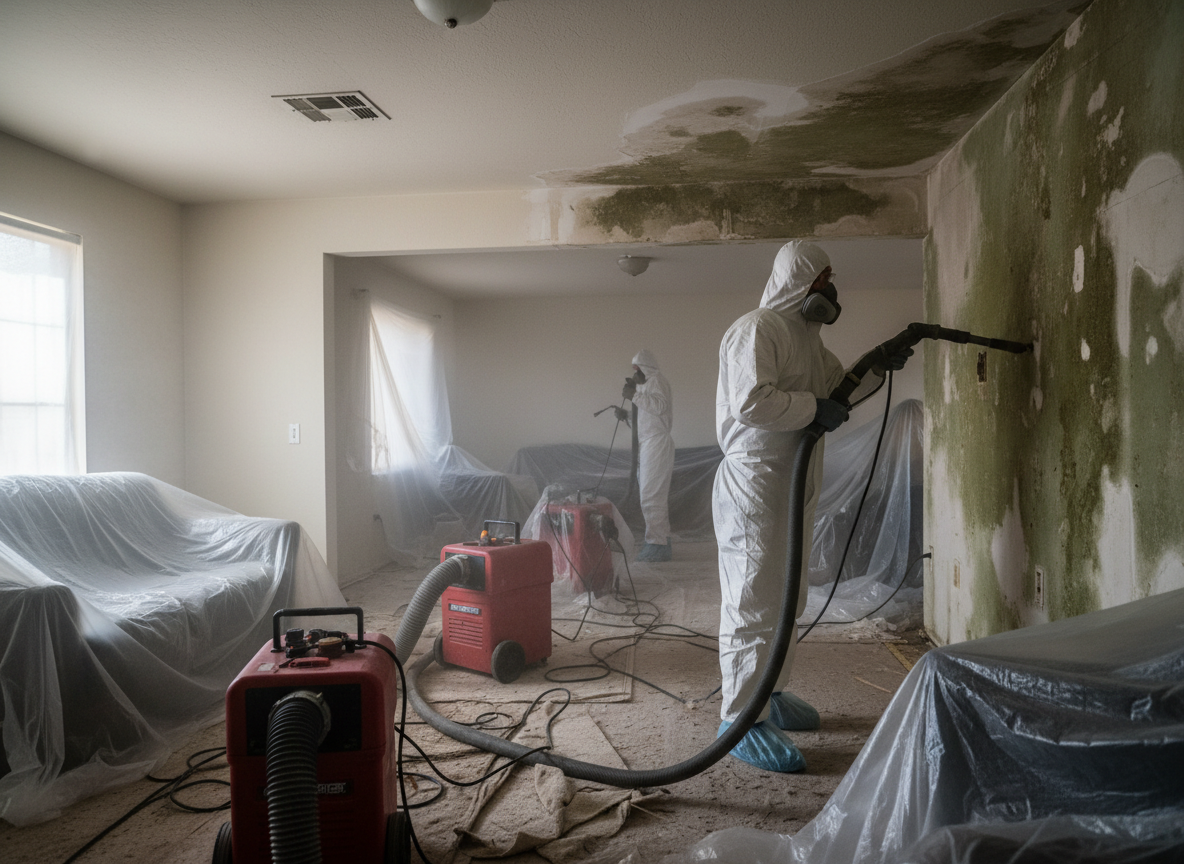
Gilbert's hot desert climate and summer monsoon rains frequently push water into wall cavities and under slab foundations in neighborhoods like Agritopia and Layne Heights. Older homes built before 2000 often have porous drywall and limited ventilation that trap moisture long after visible water recedes. When mold colonies form behind baseboards or in HVAC returns, standard drying fans alone will not reach the growth. Remediation crews must cut away affected sections, apply antimicrobial treatments to framing, and verify moisture levels with meters before any reconstruction begins.
Power Ranch and San Tan Ranch subdivisions feature stucco exteriors and tight energy-efficient envelopes that can hide leaks from irrigation systems or roof valleys. Once water migrates into insulation, mold spreads rapidly along the paper facing within 48 to 72 hours during peak summer heat. Technicians contain the work area with plastic sheeting and negative air machines to prevent spores from entering living spaces. All porous materials such as carpet padding and ceiling tiles are removed and bagged on site rather than carried through finished rooms.
Nearby Chandler and Mesa properties share similar Maricopa County soil conditions where expansive clay can shift foundations slightly, creating hairline cracks that allow repeated water entry. Remediation plans therefore include documenting the source of moisture and recommending permanent fixes such as improved grading or French drains before final clearance testing. Homeowners receive a written scope that lists every material removed and the locations of air sampling performed after work concludes.
Technician insight
In Gilbert the thing that catches most people out with Mold Damage Remediation After Water Damage is monsoon rain followed by 110-degree heat; the rapid drying on the surface hides moisture trapped behind stucco in Agritopia homes, so crews must pull baseboards and check every bottom plate even when drywall feels dry to the touch.
Monsoon Leak in Power Ranch
A roof valley leak during July storms allowed water to travel along ceiling joists into a bedroom wall. Infrared imaging revealed moisture extending six feet beyond visible stains. Crews removed the affected drywall and insulation, treated the framing, and ran dehumidifiers for four days until readings dropped below 12 percent. Clearance samples passed and the homeowner rebuilt the wall the following week.
Mold Damage Remediation After Water Damage Services We Offer
✓Drywall Mold Removal
Cut and dispose of affected drywall sections, treat exposed framing, and apply encapsulants to prevent regrowth in Gilbert slab homes.
✓Attic Mold Remediation
Remove insulation and surface mold from attic sheathing after roof leaks common during monsoon season in Power Ranch and Agritopia.
✓HVAC Mold Cleaning
Clean and sanitize ductwork and coils when water damage allows mold to colonize central air systems in tightly sealed newer homes.
✓Carpet and Pad Extraction
Remove and dispose of saturated carpet and padding, then treat subfloors to stop mold from migrating into adjacent rooms.
✓Crawl Space Mold Treatment
Address moisture trapped under homes in older Layne Heights neighborhoods where limited ventilation encourages hidden growth after plumbing leaks.
Mold Damage Remediation After Water Damage Cost in Gilbert, AZ
| Service | Typical Range | What Affects It |
|---|---|---|
| Small area under 100 sq ft | $650–$1,200 | Single room or closet with surface growth only |
| Medium remediation 100–300 sq ft | $1,400–$2,800 | Multiple rooms or wall cavities after plumbing leak |
| Attic or HVAC involvement | $2,200–$4,500 | Insulation removal plus duct cleaning adds time and disposal fees |
| Post-remediation air testing | $250–$450 | Independent lab samples for clearance documentation |
Ranges are typical for Gilbert, AZ and confirmed with an exact written quote before any work starts.
How it works
- 1
Moisture Mapping
Technicians use meters and infrared cameras to locate all wet materials in walls, floors, and ceilings before any demolition begins.
- 2
Containment Setup
Plastic barriers and negative air machines isolate the work zone to keep spores from spreading into unaffected areas of the home.
- 3
Material Removal
Porous items such as drywall, insulation, and carpet are cut out, bagged, and removed from the property for disposal.
- 4
Antimicrobial Application
Approved treatments are applied to exposed wood and concrete surfaces, followed by HEPA vacuuming of all remaining dust.
- 5
Final Drying And Testing
Industrial dehumidifiers and air movers run until moisture readings reach safe levels, then clearance samples confirm the space is ready for rebuild.
Pricing
Costs depend on square footage affected, depth of material removal, and whether HVAC components require cleaning.