
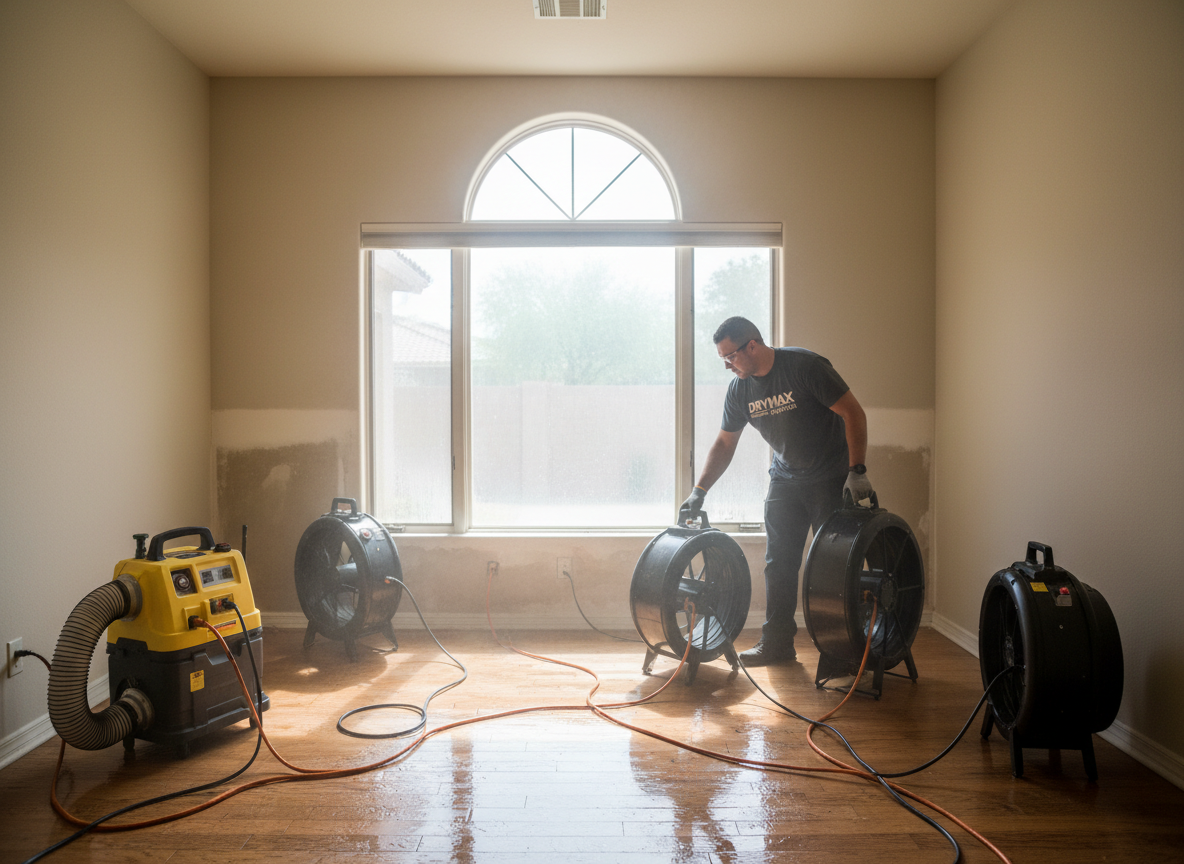
Gilbert's hot desert climate creates distinct drying challenges, especially during summer when daytime temperatures exceed 110 degrees and air conditioning systems run constantly. Homes in older neighborhoods like Downtown Gilbert and Layne Heights often feature plaster walls, slab foundations, and limited crawl spaces that trap moisture after leaks or floods. Without proper extraction of bound water from drywall, insulation, and subfloors, secondary damage such as warping or microbial growth develops quickly even when outdoor humidity stays low.
Equipment placement matters in Maricopa County properties. In single-story ranch homes common in Agritopia and San Tan Ranch, we position low-grain dehumidifiers and air movers to create negative pressure zones that pull moisture from under cabinets and behind baseboards. Concrete slabs in newer Power Ranch builds absorb water differently than the soil-heavy lots near the Riparian Preserve, requiring longer drying cycles and daily moisture readings to confirm equilibrium moisture content before any reconstruction begins.
Homeowners in Queen Creek and Chandler who attempt DIY drying with box fans often miss elevated moisture levels in HVAC ducts or behind tile in bathrooms. We use thermal imaging and pin meters on every visit to map affected areas and adjust equipment as readings drop. This prevents callbacks when monsoon remnants or irrigation overspray reintroduces water weeks later.
Mild winter temperatures in Gilbert still allow hidden moisture to migrate into wall cavities if drying is incomplete. We document drying goals for each material type and leave equipment running until readings match unaffected reference points in the same structure.
Technician insight
In Gilbert the thing that catches most people out with Structural Drying & Dehumidification is how quickly moisture travels under tile in homes built on expansive soil near Heritage Court. The desert heat pulls surface water away fast but leaves pockets behind baseboards that later cause cupping when winter temperatures drop.
Hidden moisture under tile in Agritopia kitchen
A burst supply line saturated the subfloor beneath ceramic tile in an Agritopia home. Initial fan drying left elevated readings in the plywood. We installed targeted dehumidifiers and monitored for four days until moisture levels matched the unaffected hallway, preventing future cupping.
Structural Drying & Dehumidification Services We Offer
✓Moisture Mapping and Documentation
Pin and non-invasive meter readings plus thermal imaging to locate hidden water in walls, floors, and ceilings of Gilbert homes.
✓Industrial Dehumidifier Placement
Setup of low-grain refrigerant and desiccant units sized for the square footage and construction type found in Agritopia and Power Ranch properties.
✓Air Mover and Drying Zone Configuration
Strategic positioning of high-velocity fans to create directed airflow across wet materials without spreading contaminants to unaffected rooms.
✓Daily Moisture Monitoring
On-site or remote readings recorded until materials reach manufacturer-specified dry standards before equipment removal.
✓Post-Drying Verification
Final documentation of moisture levels in structural components to support insurance claims for homes in Downtown Gilbert and surrounding areas.
Structural Drying & Dehumidification Cost in Gilbert, AZ
| Service | Typical Range | What Affects It |
|---|---|---|
| Single room drying | $650–$1,200 | Varies with wall cavity access and slab involvement |
| Whole-home drying | $2,400–$4,800 | Larger footprints in Power Ranch or Agritopia increase equipment needs |
| Daily equipment rental extension | $150–$350 | Added when readings remain elevated after initial three days |
| Moisture mapping only | $275–$450 | For insurance documentation without full drying |
Ranges are typical for Gilbert, AZ and confirmed with an exact written quote before any work starts.
How it works
- 1
Initial Assessment
We inspect affected rooms, identify water source, and map moisture migration using meters and imaging on arrival at Gilbert properties.
- 2
Equipment Deployment
Dehumidifiers and air movers are positioned based on construction type and layout found in neighborhoods like San Tan Ranch.
- 3
Ongoing Monitoring
Daily visits track moisture reduction and adjust equipment until target levels are met across all affected materials.
- 4
Final Verification
Readings are confirmed against dry standards and documented before equipment is removed from the site.
Pricing
Pricing depends on affected square footage, construction type, and drying duration; ranges reflect typical Gilbert residential jobs.