
2026-08-31 · Michael Johnson
Drying Out Flooded Garages After Summer Storms
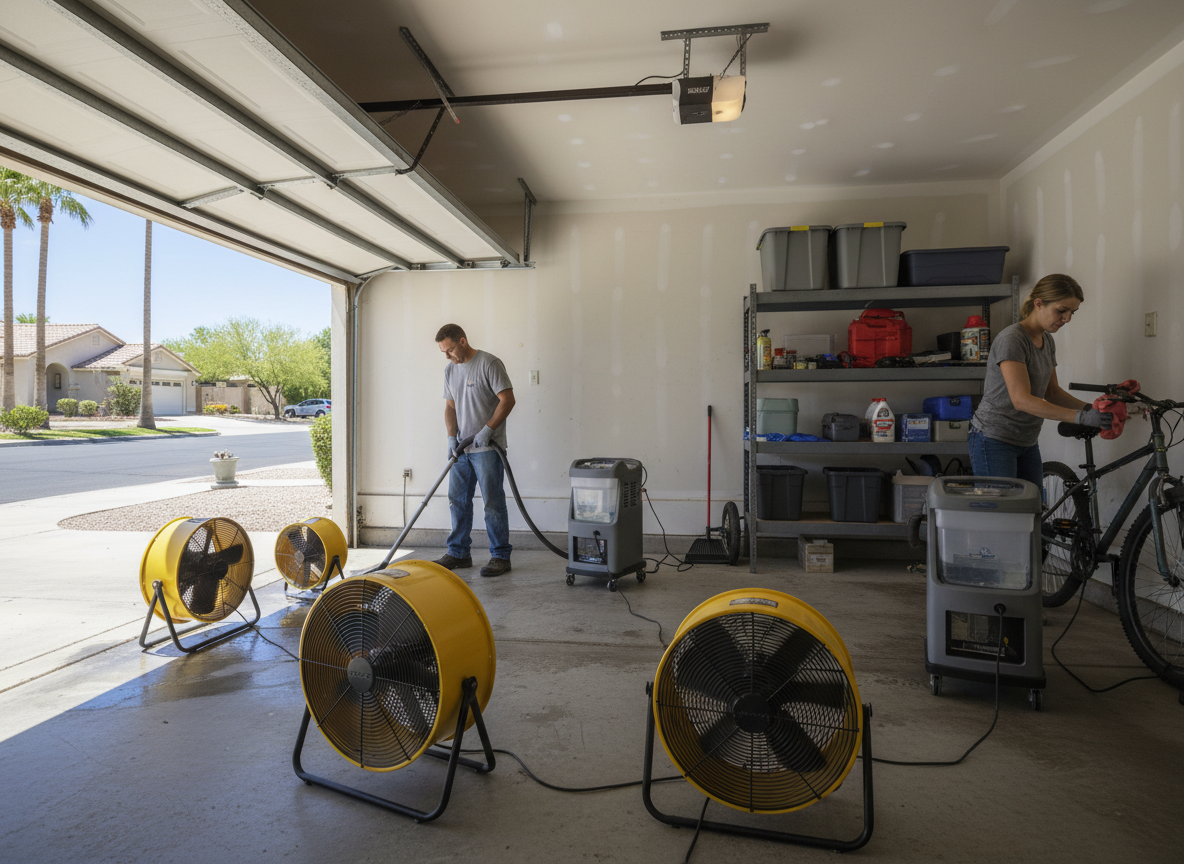
In Gilbert's hot desert climate, flooded garages after summer storms typically require 3–7 days of active drying with professional equipment before moisture levels return to safe ranges, depending on water volume and airflow. Monsoon rains hit neighborhoods like Power Ranch and Agritopia hardest because many homes built in the 1990s and 2000s have attached garages at or below street grade with limited drainage. Starting with thorough water extraction prevents saturation from migrating into drywall or slab edges common in Maricopa County construction.
Assessing Water Depth and Garage Construction
Garages in Downtown Gilbert and Layne Heights often feature concrete slabs poured directly on grade with minimal slope, so even 2–4 inches of standing water can wick into walls and door thresholds. Begin by locating the source—usually overflow from nearby streets during heavy rain—and measure depth at multiple points. Note whether water reached electrical outlets or stored items, as these change the drying sequence. Homes near the Riparian Preserve face additional runoff from the preserve's irrigation channels, which carries silt that clogs floor drains and slows evaporation. Document everything with photos before removal begins to track progress.
Initial Water Extraction & Removal Steps
Use submersible pumps to drop standing water below 1/4 inch within the first hour, then switch to extraction wands on carpet or mats if present. In San Tan Ranch garages, many residents store tools and vehicles on epoxy-coated floors that trap moisture underneath, requiring multiple passes. Follow extraction immediately with air movers positioned at 45-degree angles to push air across the slab. This sequence matters because Gilbert's low humidity helps once bulk water is gone, but trapped moisture under vehicles or shelving can linger for weeks without intervention. Link to detailed extraction protocols at /services/water-extraction-removal for equipment settings used on local jobs.
Managing Humidity During Structural Drying
After extraction, run commercial dehumidifiers sized for 300–500 square feet per unit to pull moisture from concrete and framing. Summer temperatures above 100°F in Chandler and Mesa increase evaporation rates, yet high dew points during storms keep relative humidity elevated inside closed garages. Place sensors on the slab, lower wall plates, and sill plates to confirm readings drop below 15% moisture content. Garages connected to living spaces in Queen Creek-adjacent homes need barriers to avoid pushing humid air indoors. For stucco homes common throughout Gilbert, pair this process with checks outlined in /blog/how-to-spot-hidden-moisture-in-stucco-homes.
Preventing Secondary Issues in Local Housing Stock
Once bulk drying finishes, inspect for efflorescence on slabs and soft spots in wooden door frames, which appear frequently in 20-year-old homes around Heritage Court. Remove baseboards if water wicked upward and allow 48 hours of additional airflow. In Power Ranch, where many garages back up to retention basins, check exterior grading to reduce repeat flooding. Residents can monitor progress themselves by taping plastic squares to the floor and watching for condensation. When drying extends beyond a week, consider professional structural drying services at /services/structural-drying-dehumidification to avoid mold on stored belongings.
Post-Drying Verification and Follow-Up
Final verification uses moisture meters on concrete cores and infrared scans along walls to confirm no hidden pockets remain. In Agritopia and nearby subdivisions, recheck after the next monsoon because soil saturation around foundations can push additional water back under slabs. Clean all surfaces with a mild detergent solution once dry to remove silt left by floodwater. Homeowners in Gilbert should schedule follow-up visits 30 days later, especially if hardwood thresholds were affected—see related guidance at /blog/drying-hardwood-floors-after-minor-flooding. This approach keeps garages usable without long-term structural concerns.
Gilbert Restoration Solutions operates from N Cooper Rd, Gilbert, AZ 85233 with hours Mon–Fri 8am–6pm and Sat 9am–2pm to handle these seasonal calls across Maricopa County.