
2026-08-31 · Michael Johnson
Water Extraction For Dishwasher And Refrigerator Leaks
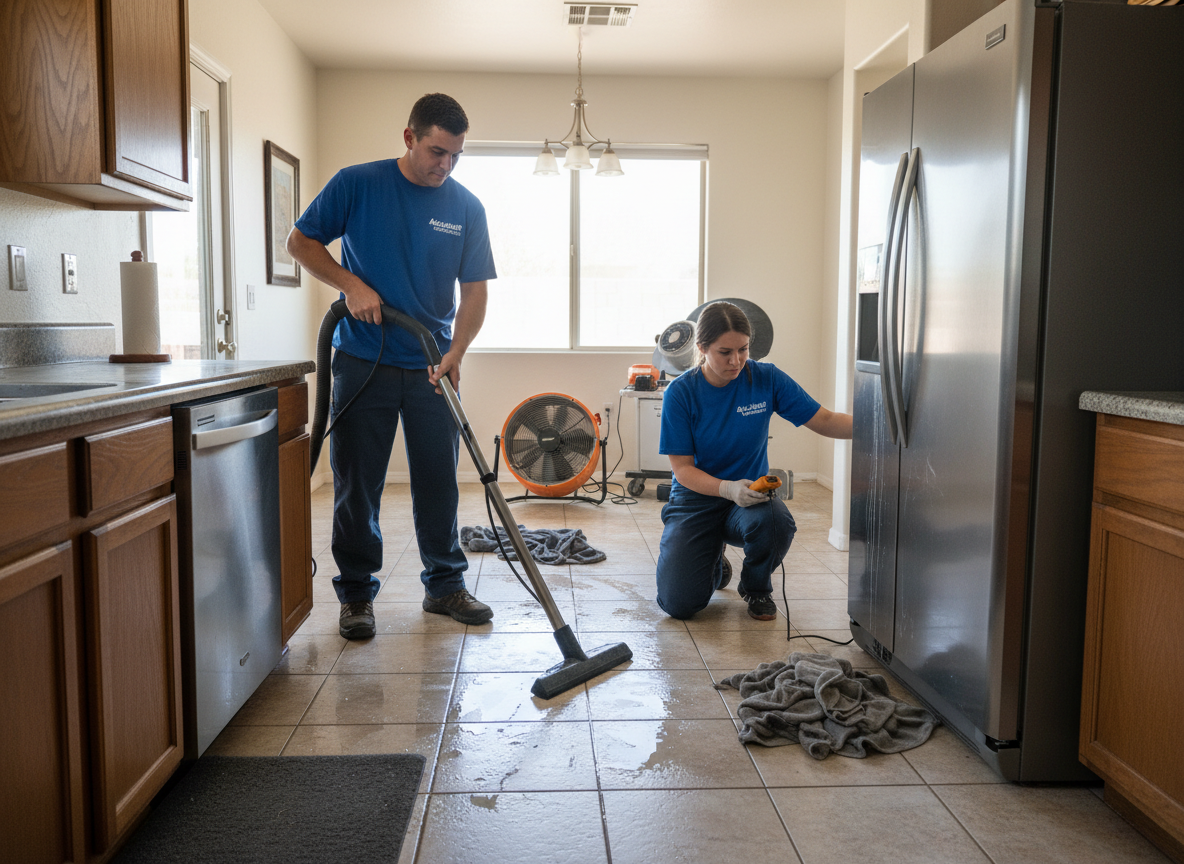
Water extraction for dishwasher and refrigerator leaks in Gilbert homes begins with isolating the appliance, removing standing water, and drying the affected slab area within the first 2–4 hours to limit moisture migration into subfloor materials. Homes built on concrete slabs in Agritopia and Power Ranch often channel small appliance leaks along the slab edge, where the hot desert climate accelerates surface drying while trapping moisture deeper in the concrete.
Appliance Leak Patterns in Local Housing Stock
Dishwashers installed against exterior walls in Layne Heights frequently leak at the door gasket or drain hose, sending water under adjacent cabinets and along the slab. Refrigerators with ice makers in San Tan Ranch homes leak at the supply line connection behind the unit, allowing water to pool under the appliance and wick into drywall base plates. These leaks rarely exceed 10–15 gallons yet reach wall cavities within hours because of the mild winters that keep indoor humidity moderate year-round. Slab construction common throughout Maricopa County means any standing water sits directly against the foundation, increasing the chance of hidden moisture traveling toward nearby rooms.
Initial Water Extraction Steps on Slab Foundations
Technicians first shut off the appliance water supply, then use portable extractors to pull water from under the unit and along baseboards. A moisture meter checks the slab perimeter every 12 inches to map how far water has traveled before extraction begins. In homes near Gilbert Regional Park where irrigation runoff can raise local soil moisture, crews often place air movers at slab edges immediately after extraction to prevent re-wicking. Extraction typically removes 80–90 percent of free water in the first pass when performed before the water reaches carpet padding or drywall.
Drying Challenges in Hot Desert Conditions
Gilbert’s very hot summers cause rapid surface evaporation that masks remaining slab moisture, so dehumidifiers must run for 48–72 hours even after visible water is gone. Structural drying equipment placed in Power Ranch kitchens prevents mold on particleboard cabinet bases that sit directly on the slab. Without this step, residual moisture can travel toward adjacent drywall and create conditions that later require mold damage remediation after water damage. Crews monitor relative humidity inside wall cavities until readings drop below 50 percent before removing equipment.
When Extraction Requires Follow-Up Services
If water reaches more than 18 inches up the wall or travels under adjacent flooring, extraction alone is insufficient and must be paired with targeted drying of cavities. Homeowners in Downtown Gilbert with older stucco exteriors should check for hidden moisture along exterior walls after any appliance leak. Our team operating from N Cooper Rd responds during Mon–Fri 8am–6pm and Sat 9am–2pm to perform extraction before moisture migrates further. For appliance-related incidents that affect multiple rooms, Appliance Water Damage Cleanup coordinates extraction with full structural drying.
Preventing Secondary Damage in Nearby Neighborhoods
Residents in Agritopia and surrounding areas often discover refrigerator leaks only after water reaches the edge of tile or wood flooring. Prompt extraction followed by Structural Drying & Dehumidification prevents the need for later repairs. Checking supply lines every 8–12 years reduces the chance of sudden leaks in homes built during the rapid growth periods of Maricopa County. When extraction is completed correctly, homeowners avoid the hidden moisture issues detailed in How To Spot Hidden Moisture In Stucco Homes.