
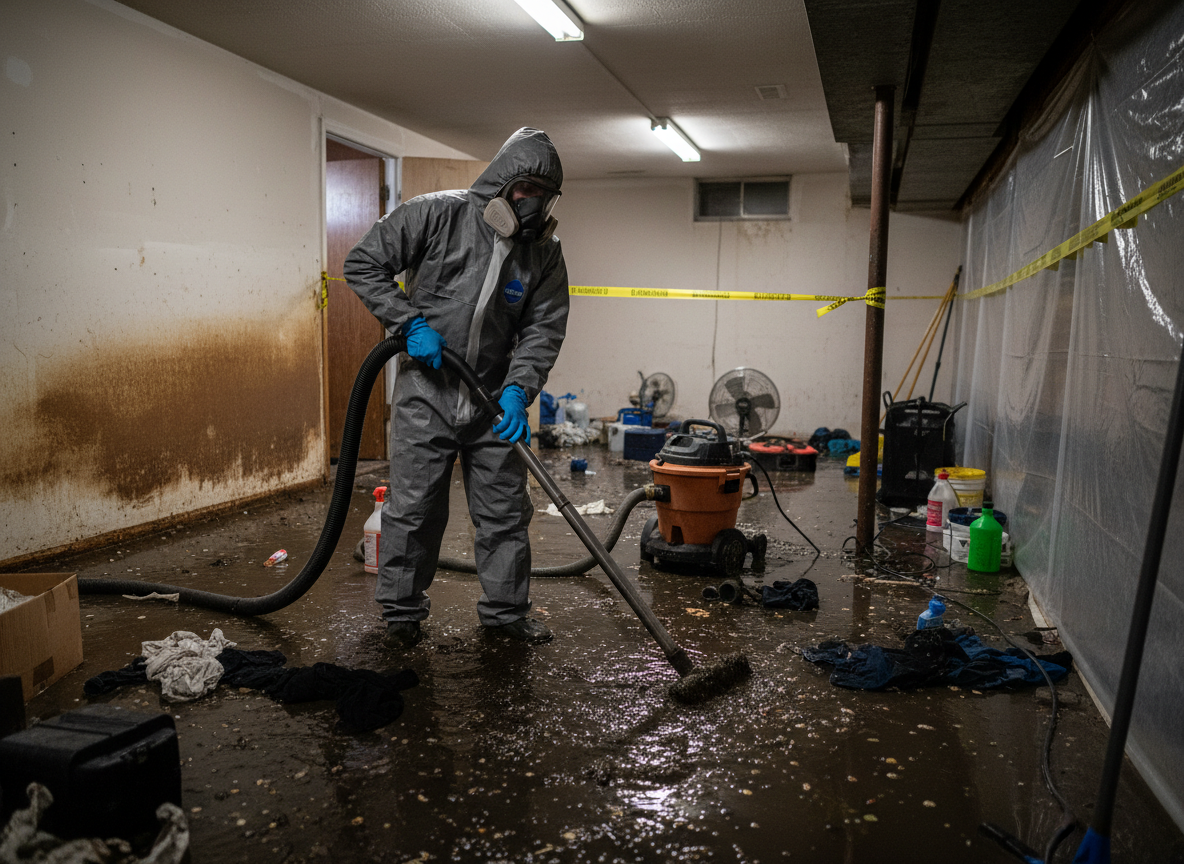
Gilbert homes in neighborhoods such as Layne Heights and San Tan Ranch often sit on slab foundations that trap contaminated water beneath cabinets and baseboards during a sewage backup. In the hot desert climate, standing water evaporates quickly on the surface but leaves hidden moisture that feeds bacteria and odors inside wall cavities. Technicians must remove base trim, pull carpet pads, and use moisture meters to locate every pocket before any drying begins, or the smell returns within days once monsoon humidity spikes.
Maricopa County regulations require licensed haulers for all biohazard waste from sewage events, so crews separate solids, bag them on site, and document chain of custody before transport. Nearby Queen Creek and Chandler properties share the same aging clay sewer lines that crack under shifting desert soils, sending backups into laundry rooms and finished basements. Proper antimicrobial application on subfloors and joists prevents cross-contamination to HVAC systems that run year-round in the heat.
Power Ranch and Agritopia homes built in the 2000s frequently have finished lower levels with tile over concrete, which slows visible water spread but hides saturation under the slab edge. Extraction starts with truck-mounted units to pull standing effluent, followed by HEPA air scrubbers to capture airborne particles before any demolition. Homeowners who attempt their own cleanup often miss contaminated drywall behind toilets or in utility closets, leading to repeated calls after the first heavy rain.
Riparian Preserve and Heritage Court areas see occasional irrigation-line cross-connections that push sewage into yards and crawl spaces during peak summer watering. Crews coordinate with local plumbers to camera the main line before final clearance, ensuring the source is corrected rather than simply dried. All affected porous materials are bagged and removed the same day to limit exposure in the mild winter months when windows stay closed.
Technician insight
In Gilbert the thing that catches most people out with Sewage Backup Cleanup is the way slab foundations in Layne Heights and San Tan Ranch trap water under cabinets even after the floor looks dry. Monsoon humidity then reactivates bacteria weeks later because homeowners skip pulling the toe-kick and checking the edge with a meter.
Sewage Backup Into Finished Basement
A Power Ranch homeowner called after a main-line clog pushed sewage into a carpeted lower level. We found water had wicked two feet up the drywall behind the washer and into the HVAC closet. Extraction and removal of the pad and base trim stopped the spread; three days of targeted drying and antimicrobial fogging cleared the space without odor returning during the next heat wave.
Sewage Backup Cleanup Services We Offer
✓Black Water Extraction
Removes standing sewage from floors, carpets, and subfloors using truck-mounted equipment before bacteria spread to adjacent rooms.
✓Biohazard Contamination Removal
Disposes of contaminated carpet, pad, drywall, and baseboards following Maricopa County waste-handling rules.
✓Structural Drying After Sewage
Places air movers and dehumidifiers in wall cavities and under cabinets to dry slab edges common in Gilbert homes.
✓Odor Neutralization Treatment
Applies EPA-registered antimicrobials and fogs to eliminate sewage odors trapped in HVAC ducts and insulation.
✓Sewage Affected Flooring Removal
Cuts and removes tile, hardwood, or laminate that has wicked contaminated water along slab perimeters in Power Ranch homes.
Sewage Backup Cleanup Cost in Gilbert, AZ
| Service | Typical Range | What Affects It |
|---|---|---|
| Initial Assessment And Extraction | $350–$750 | Larger homes or multiple rooms increase the range. |
| Contaminated Material Removal | $400–$900 | Depends on linear feet of drywall and carpet removed. |
| Full Drying And Antimicrobial Treatment | $600–$1,200 | Slab-edge homes in Agritopia require more equipment. |
| Odor Removal And Clearance Testing | $250–$500 | HVAC cleaning adds to the upper end. |
Ranges are typical for Gilbert, AZ and confirmed with an exact written quote before any work starts.
How it works
- 1
Site Assessment
Technicians inspect all affected rooms, test moisture in slabs and walls, and identify hidden contamination in cabinets or behind appliances.
- 2
Containment And Extraction
Plastic barriers isolate the area while truck-mounted pumps remove standing water and solids from floors and subfloors.
- 3
Material Removal
Contaminated carpet, pad, drywall, and trim are cut out and bagged for licensed disposal before any drying equipment runs.
- 4
Cleaning And Antimicrobial Application
Floors and joists receive EPA-registered treatments, followed by HEPA air scrubbing to capture airborne particles.
- 5
Drying And Clearance
Industrial drying continues until moisture readings meet industry standards, then final walkthrough confirms no remaining odor or moisture.
Pricing
Cost depends on square footage affected, depth of contamination into walls or slabs, and whether disposal fees apply.